You may check out all the available trips and book one that suits you.
Continue Browsing TripsYou will be greeted by the team of Tour De Rakaposhi at Islamabad International airport. Then transfer you along with your luggage to a centrally located hotel in Islamabad. Overnight stay in Islamabad.
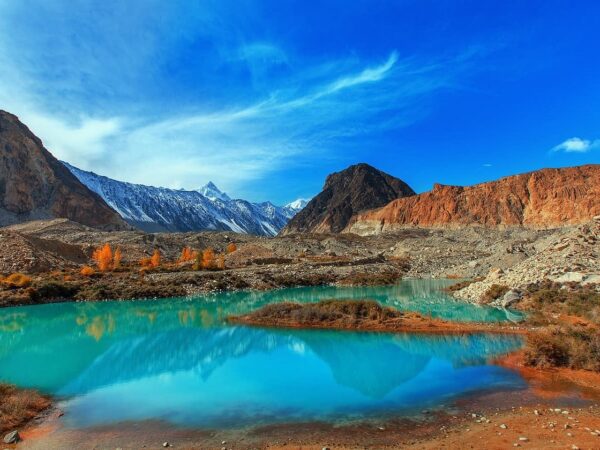
a) Overnight Masherbrum Hotel. Preparations for our trek and depending on our time of arrival into Skardu, there may be time to visit the town and possibly an excursion to Kachura Lake situated at the edge of the valley. Skardu is the regional capital of Baltistan, lying at the edge of a broad floodplain that is the confluence of the Shyok, Indus, and Basha Rivers.
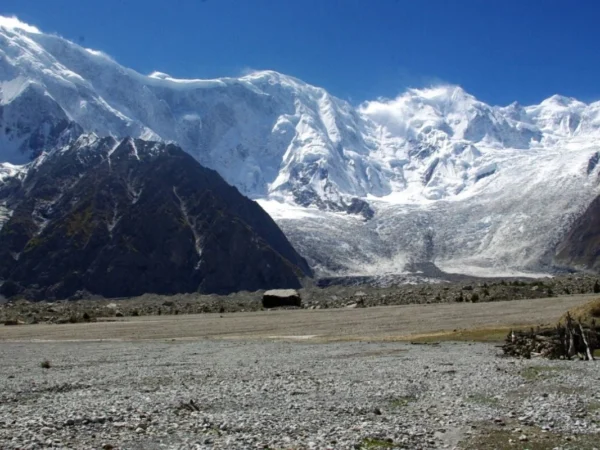
b) If we are driving the road journey today will be 7-8 hrs to Skardu (275km) or 10-12 from Chilas. On route are spectacular views of Nanga Parbat (8125m) overnight stay in Skardu.
We will travel by jeep with our crew and supplies along the Shigar and Braldu valleys to Askole. Villages in Shigar have changed little in over five hundred years; farms with fields of barley, wheat, and vegetables surrounded by stone walls and stands of poplar, willow, and apricot trees. The apricot is a very important crop in the north, having a multitude of uses for the Balti and Hunzakut people. Villagers greet us as we pass through on the rugged dirt and stone road that leads to Baltoro. As we approach, the landscapes become desert-like, and once within the sheer valley of the Braldu, it is necessary to cross the river several times by suspension bridges. At various points, the road may have collapsed due to erosion and we will transfer the gear across on foot to a vehicle on the other side.
Meals: (Include: B-L-D) O/N Camping in Askole.
The walk from Askolie to Namla is on an easy gentle plain first and then becomes difficult as we get on to the snout of Biafo Glacier. This will take about 6 to 8 hours. The first sight of the pinnacles of the Paiyu Group is stunning.
Meals: (Include: B-L-D) O/N Camping.
This can take 7 hours or more. We walk on the moraines of Biafo Glacier as well as in an ablation valley.
This is not an easy walk as we trek on rocks most of the time.
Meals: (Include: B-L-D) O/N Camping
From Mongo, we get on to the white Biafo Glacier where the walking is easier and then we diagonally walk across the Biafo to reach its other side near Biantha. The difficult parts here are getting onto the glacier and then getting off it. This takes about 6 hours of walking and will give us our first sight of the Latok Group. The campsite is located in a green meadow.
Meals: (Include: B-L-D) O/N Camping.
Camp, rest day. Wash up, relax, read, climb on a steep ridge for outstanding views behind the camp, sing and dance with the porters! There are several different walking options for today, and in particular, there is a small peak above the camp which can be climbed to give fantastic views across to the peaks of Ogre and Latok.
Meals: (Include: B-L-D) O/N Camping.
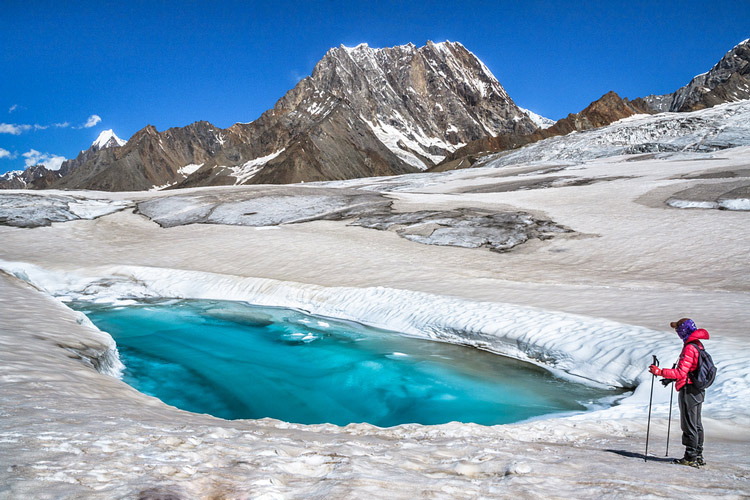
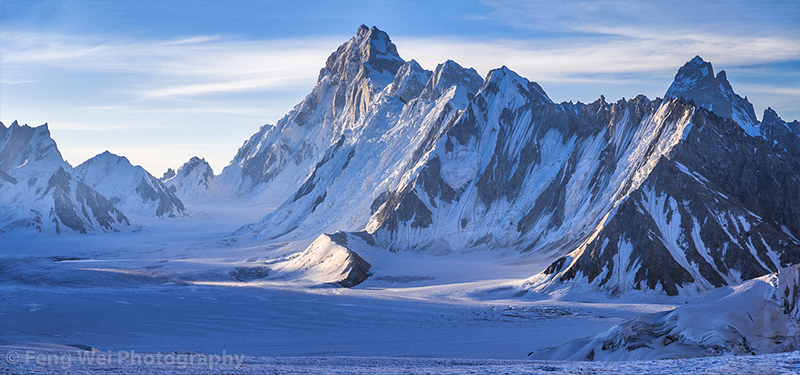
Six to eight hours of walking. Getting onto the glacier is tricky. Once on it, the walk is pretty straightforward on the white glacier. However, we are careful to avoid crevasses here. The greenery of Biantha campsite is only a memory now. We are in the dramatic and awesome expanse of the Biafo with its jagged pinnacles. The Ogre (7,813 m.) towers high above us on our right. There is only snow and rock now.
Meals: (Include: B-L-D) O/N Camping.
The trek takes about 6 to 7 hours over ice and snow. Once again we are careful to avoid crevasses along the way.
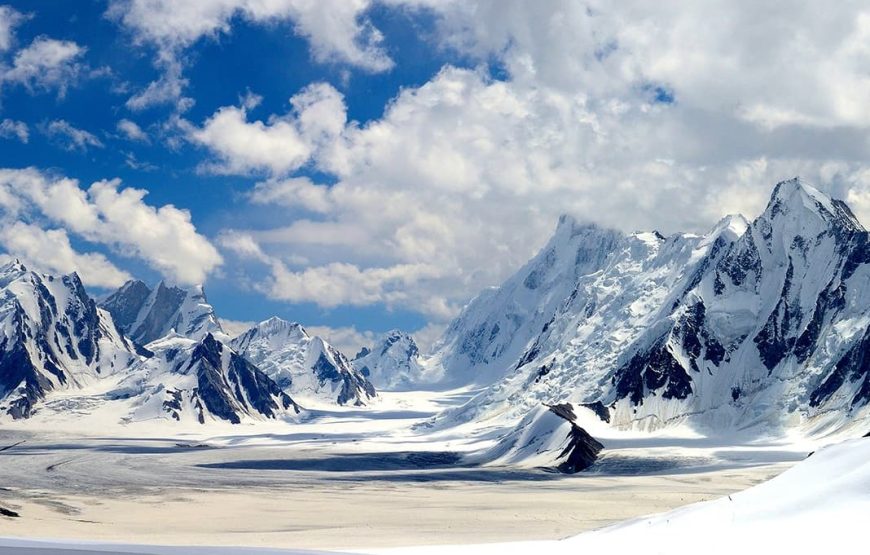
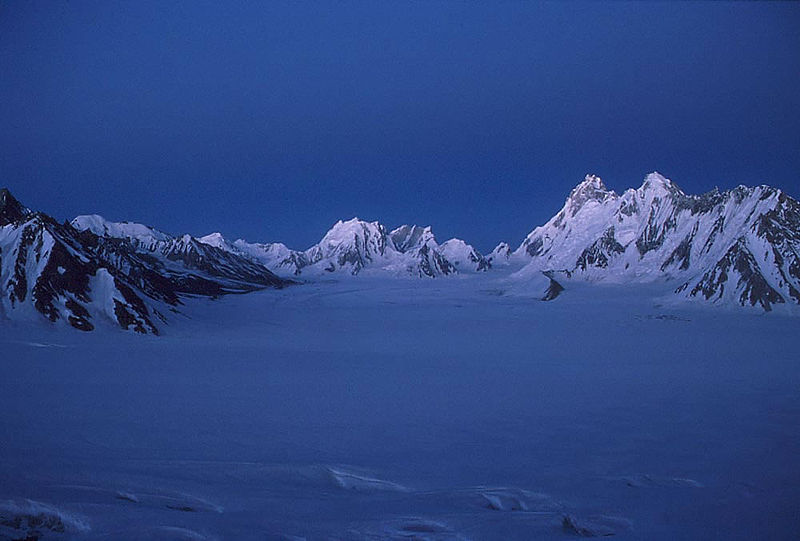
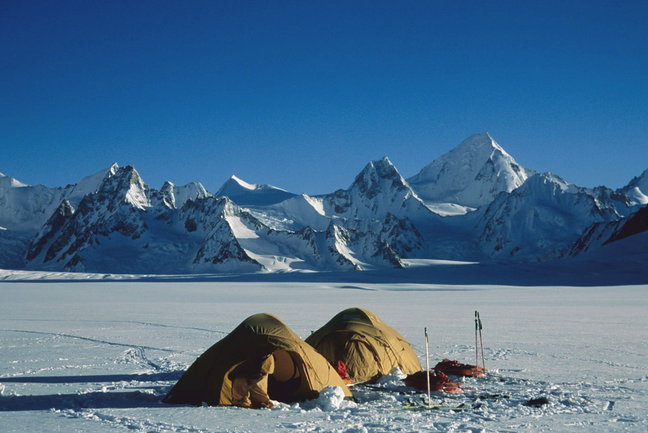
Snow Lake is a magical place. Be sure to get out of the tent to experience the stars in the night. It is an unforgettable experience!
Meals: (Include: B-L-D) O/N Camping.
A 6 to 7-hour walk on slopes of about 30 degrees takes us to the top of the pass. Once again, we are careful to avoid crevasses. Even though the climbs on gentle slopes, we find it difficult due to the rarefied air. When on top we see a panorama described by an early explorer: “Beyond all comparison the finest view of mountains it has been my lot to behold.” On one side the Biafo lies and on the other side, we look towards the Hispar Glacier and the peaks above Hunza valley. The view of sunrise from the pass is another sight to behold.
Meals: (Include: B-L-D) O/N Camping.
This is a long day’s walk and can take more than 8 hours. We want to make sure that we leave the pass early before the snow becomes soft. On the way down, once again, we are careful to avoid crevasses.
We will have to cross the Kani Basa Glacier before we can camp on a green campsite, which is a welcome sight and site after being on snow for the last few days. On the way, we can see the famous Kanjut Sar (7,760 m.) towering high above the Kani Basa Glacier.
.Meals: (Include: B-L-D) O/N Camping
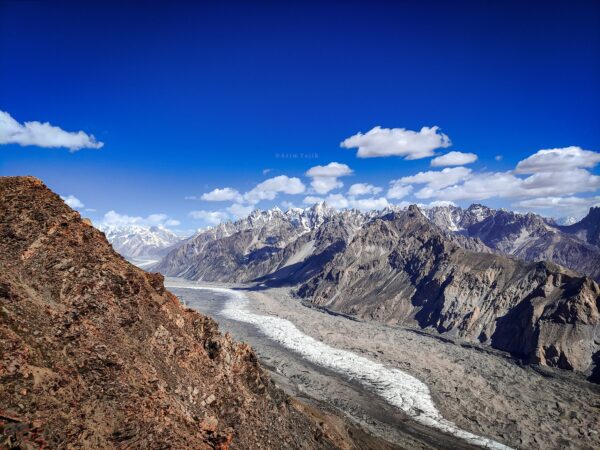
This will take about 7 hours and on the way, we will cross the Jutmal Glacier. It is tricky here as the route through the glacier is like a maze with high ice walls. After crossing it, another hurdle that we face is the climb up on a loose cliff face. Once up the face, we now enter a beautiful campsite with lovely views across the Hispar Glacier. Some streams have to be crossed on the way.
Meals: (Include: B-L-D) O/N Camping.
This section takes about 8 hours. On the way, Pumory Glacier is crossed and also a stream. The crossing of Pumory is not that difficult as the Jutmal. However, once again, we have to descend on to the ablation valley and once again we have to climb the cliffs on our right to get to the campsite. This is an exhaustive process.
Meals: (Include: B-L-D) O/N Camping.
One more glacier to cross! This is Kunyang Glacier. The walking does get a little easier. However, crossing the Kunyang is tedious and the climb on rocks on the other side can be difficult. This is a short day consisting of about 4 hours. Our camp is in a shepherd’s meadow where villagers from Hispar bring their yaks for the summer. The view of Makrong Chhiish (6,607 m.), on the other side of Hispar Glacier, is outstanding.
Meals: (Include: B-L-D) O/N Camping
Another short day of about 4 hours. Some streams have to be crossed on the way, but the walking is relatively gentle. A bridge over the Hispar stream has to be crossed and then a climb on a good path brings us into the Hispar village, the first habitation we will have seen since leaving Askole.
Meals: (Include: B-L-D) O/N Camping.
This takes about a few hours of walking on a jeep road and here our epic trek ends. We further drive to Hunza.
Meals: Breakfast O/N Camping.
Early Morning after breakfast drive to Besham short stay en route for photography, Lunch, and toilet stop.
Overnight stay in Besham.
Early morning we will drive to Islamabad, en-route we will visit the Taxila Museum. Construction of Taxila museum started in 1918, its foundation stone laid by Lord Chelmsford, Viceroy of India in 1918.
Construction was concluded in 1928 and the museum was opened for the public by Sir Habibullah then the ministry for Education. Sir John Marshall who was going to be retired from the post of Director General of Archaeological Survey of India in 1928, could not complete its original plan. The government of Pakistan constructed the northern gallery in 1998. There are 4000 objects displayed, including stone, stucco, terracotta, silver, gold, iron, and semiprecious stones. Mainly the display consists of objects from the period 600 B.C to 500 AD. Buddhist, Hindu, and Jain cults are well represented through these objects discovered from three ancient cities and more than two dozen Buddhist stupas and monasteries, and Greek temples.
Taxila Museum has located 35 km from Islamabad on the Grand Trunk Road to Peshawar. It is famous for the remains of Gandhara art. Most of the sites at Taxila, dating back 600 BCE to 500 CE, are located around the Taxila Museum. We will reach Islamabad in the evening.
Overnight stay in Islamabad.
Extra ‘cushion’ day!
*Note: Day 20 will be used as a ‘cushion’ day in case of delays in travel due to weather, route change, health, acclimatization issues during the trek, etc.
For those who want to escape the heat of the city a very pleasant excursion is up to the former British hill station at Murree. The faded remnants of the town’s colonial past can be seen in its gable-roofed buildings and small Anglican churchyard, whilst the grassy lawns of the imposing Hotel Cecil make a splendid place to enjoy afternoon tea. This excursion is not included in the trip price but if several members of the group wish to make this journey a private vehicle and driver can be hired locally for a very modest sum. Back in Rawalpindi, we enjoy a final evening meal usually taken at one of the best restaurants in Islamabad.
After breakfast, you will transfer to the airport for your return flights
There are many variations of passages of Lorem Ipsum available
dgfdgfdg
Have a question before booking? Message us to learn more.
Login to use
Location
Duration
Embark on a guided adventure to Elephant Jungle...
Login to use
Login to use
Location
Discover the beauty of the Frioul Islands Calanques...
Login to use
Login to use
Location
Explore the vibrant area of Soho, Chinatown, Leicester...
Ut enim ad minim veniam, quis nostrud exercitation ullamco laboris nisi ut aliquip ex ea commodo consequat. Duis aute irure dolor in reprehenderit in